Loading artist

Ogden Pleissner
Biography
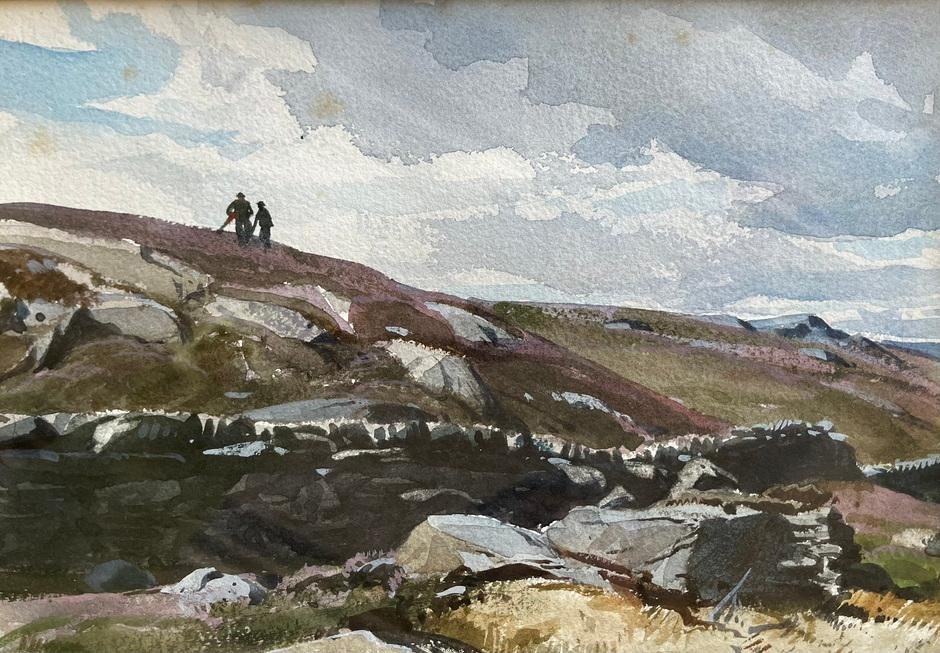
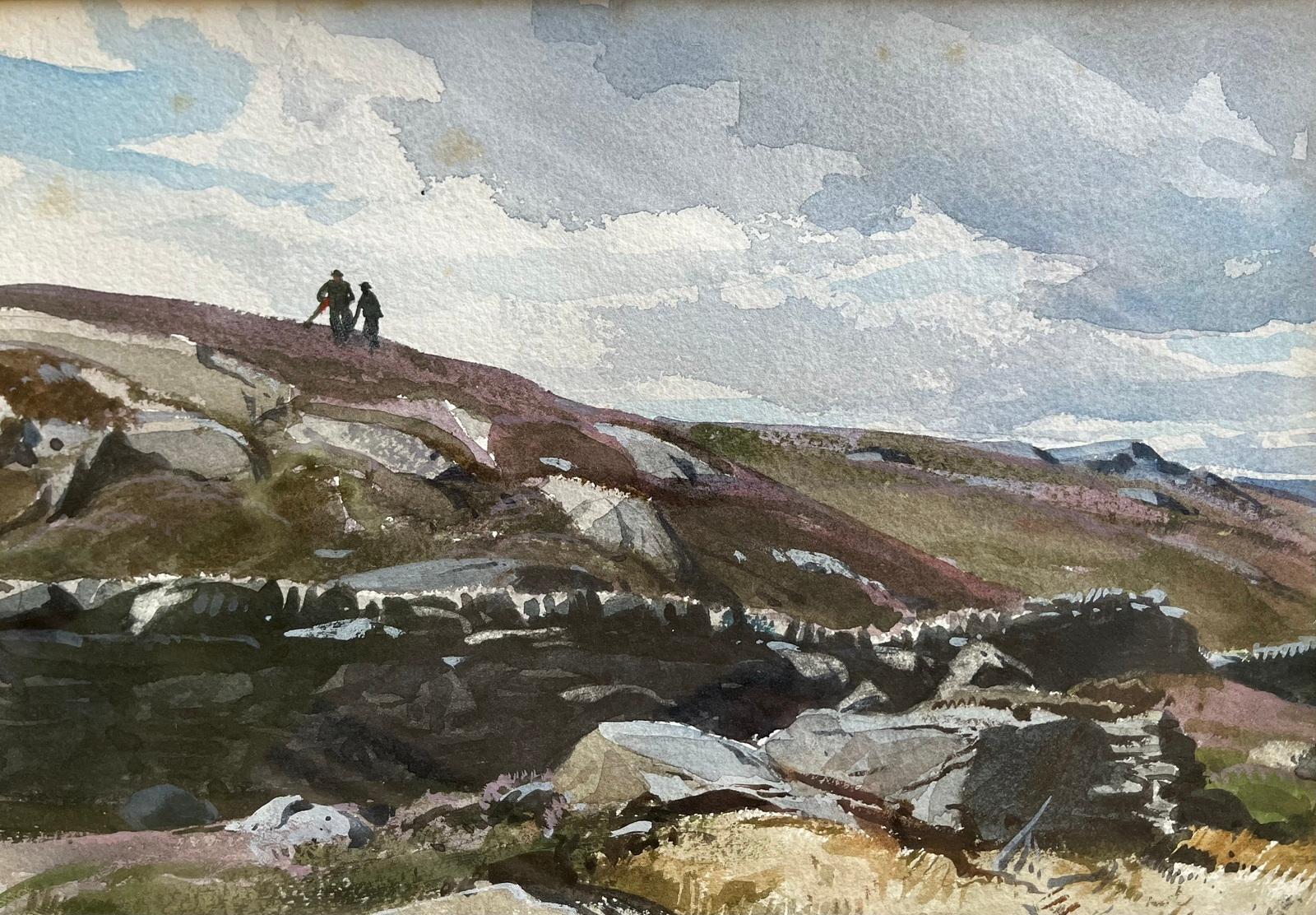
Ogden Minton Pleissner was a twentieth-century American artist known for his fishing and hunting-themed sporting paintings as well as his landscapes. Over a career spanning fifty-seven years, he captured scenes from across America, Europe, and Bermuda. At age twenty-seven, Pleissner’s painting Backyards, Brooklyn was purchased by the Metropolitan Museum of Art, making him the youngest artist in their collection at the time. Born in Brooklyn, New York, Pleissner was raised in a creatively supportive family. As a teenager, he spent his summers at a camp in Dubois, Wyoming, where he developed a lasting appreciation for nature and the outdoors. There he spent much of his time fishing and sketching iconic imagery of the American West—its landscapes, wildlife, Native Americans, and cowboys. His deep love of nature and outdoor life remained a defining influence throughout his artistic career. After graduating from the Brooklyn Friends School, Pleissner studied at the Art Students League of New York for four years. While attending a summer drawing class in Cape Breton, Nova Scotia with instructor Frank DuMond, he met his future wife, Mary Harrison Corbett, and was introduced to Atlantic salmon fishing—a sport he would pursue throughout his life. Mary shared his love of the outdoors, and together they often returned to Dubois, Wyoming, where they worked and painted at the C-M Ranch, owned by their friend Charlie Moore. Many of Pleissner’s landscapes from the 1930s and 1940s depict this region. Following their marriage, Pleissner initially struggled to find steady work during the Great Depression. Despite financial hardship and numerous rejections from publishers, his paintings gradually gained recognition. After approaching several New York galleries, Harlow MacDonald agreed to display one of his works in his Fifth Avenue gallery—it sold the very next day. This success led to his first solo show at the MacBeth Gallery in 1930, where he was represented for the next two decades alongside artists such as Andrew Wyeth. During this time, Pleissner also taught at Pratt Institute until 1934. Pleissner resisted painting according to formula, preferring instead to let experience and intuition guide his art. Beyond the foundational training he received at the Art Students League, much of his skill came from firsthand observation during his extensive travels. Whether depicting a Brooklyn backyard or a quiet European hillside, his paintings convey what critics called a “reflective pleasure.” Pleissner’s distinctive style combined expressive yet controlled brushwork and a sensitivity to fleeting light, often capturing moments suspended in time—a fisherman’s poised line, or the afternoon shadows cast across a city façade. In addition to museum collectors, Pleissner’s work also caught the attention of the U.S. government. General Henry “Hap” Arnold of the Army Air Forces personally sought him out for commissions. After teaching at the National Academy School of Fine Arts, Pleissner was hired by the U.S. Office of Emergency Management to paint scenes of wartime industry. In 1942, he joined the U.S. Army Air Forces Historical Division as an artist, earning the rank of Captain after completing officer training in Miami, Florida. Though he had primarily worked in oils, the damp, cold conditions of the Aleutian Islands forced him to adopt watercolor as his main medium. “With the little oil sketches, the darn things would stay wet all the time and make an awful mess to transport,” he explained. “I did so many watercolor sketches and paintings during the war because they were easier to carry around.” This shift marked a turning point in his career, and watercolor would remain central to his practice thereafter. His wartime paintings were exhibited at the Corcoran Gallery of Art in Washington, D.C. In 1944, Pleissner became a war correspondent for Life magazine, spending two years documenting American campaigns across France, Belgium, Germany, and Italy. Many of these works now reside in the United States Army Art Collection, adorning the halls of the Pentagon, West Point, and the Air Force Academy. After the war, Pleissner continued to travel and paint landscapes throughout Europe before settling in Vermont, first in Pawlet and later in Manchester. Following the death of his first wife, Mary, in 1974, he married Marion Gould in 1977 and established his final studio in Manchester, where he lived and worked until his death on October 24, 1983, during a trip to England. Pleissner’s paintings are now held in major collections, including: The Metropolitan Museum of Art The Brooklyn Museum The Los Angeles County Museum of Art The Smithsonian American Art Museum The Shelburne Museum in Vermont houses a permanent Pleissner Gallery and a reconstructed version of his Manchester studio, preserving many of his original materials. His legacy endures through these collections and through his masterful ability to capture the subtle beauty of both wilderness and civilization.