Loading artist


Christine Rosamond
Biography
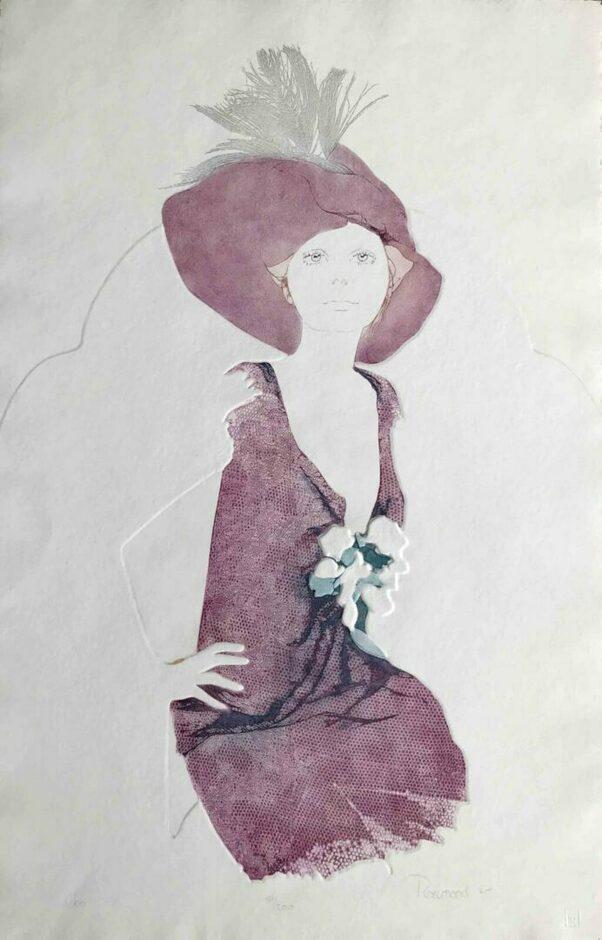
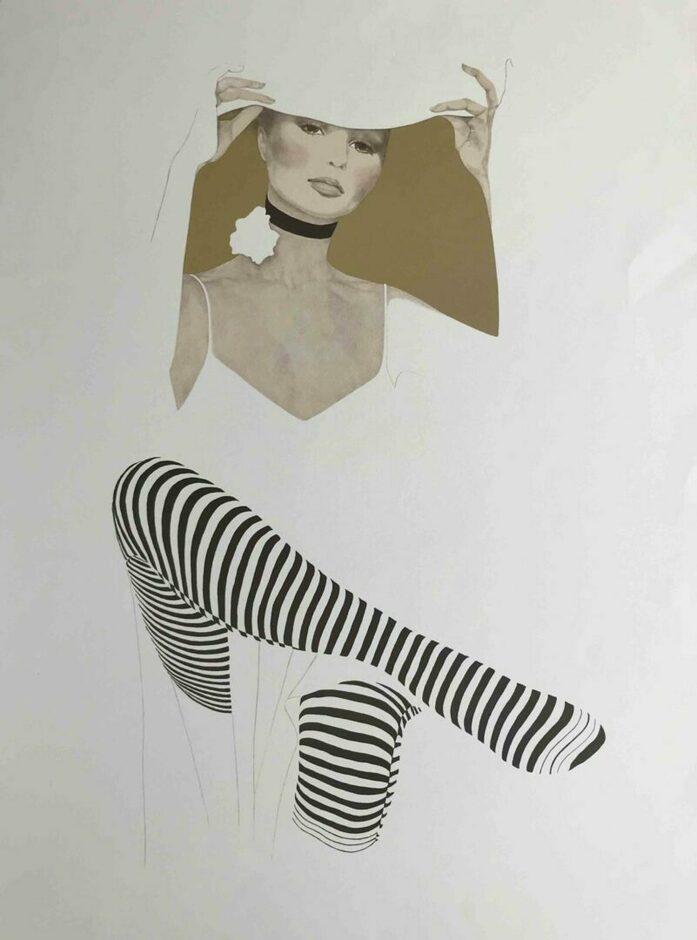
From simple pencil sketches to finely detailed watercolors and oils, this comprehensive collection provides a rare opportunity to experience the breadth of Christine Rosamond’s work. It also allows us to understand the artist behind the paintings — to see her evolution from a teenager struggling to reconcile her need for expression with fear of self-revelation, to a self-actualized woman strong enough to make peace with her past and surround herself with love. The Beginning: Oakland, California If Christine’s parents had encouraged her talent, we might have early works from her childhood. Instead, fearing that Christine would outshine her brother as the family artist, her mother, Rosemary, forbade her to draw at home. The only time she could express herself was at school or secretly in her closet, by flashlight, after everyone was asleep. Her kindergarten teacher recalled that by age five, Christine drew with adult skill, producing animal studies with near-perfect detail and perspective. In addition to artistic suppression, Christine endured physical abuse from her mother. Overwhelmed by the pressures of raising four children with little support from her alcoholic husband, Rosemary often released her anger on Christine. This trauma is visible in Christine’s earliest works: Teenage Drawing II depicts a withdrawn subject, while Teenage Drawing III captures shock and anger. Overnight Sensation: Los Angeles, California After a failed marriage and the birth of her daughter Shannon, Christine met Scott Hale, a lighting designer who recognized her talent. Inviting her to move in and focus on painting, Scott gave Christine the encouragement she had long needed. In 1972, he persuaded her to exhibit at the Westwood Art Fair, where art dealer Ira Kaplan bought out her collection and began commissioning new works weekly. For Christine, painting was more than a livelihood — it was a rebellion against her mother’s control. This defiant energy fueled her now-iconic portraits such as Summer Mood, Denim and Silk, and Simone. Her women — strong, self-assured, and beautiful — resonated deeply with the 1970s feminist movement, captivating millions and making Christine one of the most reproduced artists of her time. Yet the same intensity that powered her art undermined her relationship. Increasingly dependent on alcohol to manage her emotions, Christine’s insecurity and rages drove Scott away. Her heartbreak is reflected in Mother and Child, where her focus turns to Shannon’s pain. Fame: New York, New York Determined to elevate her work from mass-market prints to fine art, Christine began producing lithographs with publisher Jack Solomon. She also fell in love with a married fine art printer whose emotional stability brought her comfort and confidence. Her work from this period, such as Autumn, Victoria, and Contemplation, reflects both technical refinement and emotional maturity. This was Christine’s most successful era. Her lithographs sold in unprecedented numbers, making her the most published artist in the world — surpassing Norman Rockwell, Salvador Dali, and Alexander Calder. Yet behind the success lingered heartache, captured in Tristesse, which expressed her realization that her lover was unattainable. Freedom and Despair: Encino, California In a vulnerable moment, Christine reconnected with her mother, who introduced her to actor Rick Partlow. Enchanted by his charm, Christine soon married him. Works like Galletea and The Ascent radiate romantic optimism. However, Rick’s restlessness soon derailed their life. He convinced Christine to leave Ira Kaplan and let him manage her career. Without structure, she was swept into his world of late-night parties, alcohol, and cocaine. When she realized Rick had depleted her finances and failed to sustain her business, Christine channeled her anger into Crescendo — a portrait of a woman twisted to breaking point by manipulation. Introspection: Monterey, California After divorcing Rick, Christine married muralist Garth Benton, who introduced her to Jungian psychology and meditation. Under his influence, Christine explored her subconscious through painting, with Garth titling and interpreting her work. Off the Wall urged her to step out of the background and claim her individuality. Fatal Position warned her to rise from self-protection and embrace her destiny. Bus Stop portrayed the duality of her conscious and unconscious selves. Though these pieces represented Christine’s deepest work, they were poorly received commercially. Humiliated, she returned to her earlier, more popular style, creating works such as Dimanche and Dominique in Paris. Garth continued to push her toward confronting buried trauma. His intuition proved correct when Christine’s estranged father, Vic, reappeared — only to be arrested months later for molesting a teenage girl. The revelation triggered repressed memories of her own abuse. Unable to bear the pain, Christine relapsed into alcoholism. Fearing that Garth could harm their daughter Drew, she filed for divorce. Healing and Rebirth Determined to heal, Christine joined Alcoholics Anonymous and achieved lasting sobriety. Reclaiming control of her career, she enlisted women — including her sister Vicki — to help run her studio. For the first time, her art began featuring multiple women, symbolizing community and support. The Travelers marked this transformation. Originally conceived with baggage as a motif, Christine removed the suitcases — a symbolic act of leaving the past behind. The women lean on each other, one awake and composed, representing Christine’s newfound self-awareness. A year later came Storyteller I, in which a woman recounts a grave story to a circle of listeners. The inclusion of Shannon and her stepdaughter Bree suggests Christine confronting the family’s hidden trauma and warning the next generation. By 1992, Christine’s art reflected renewal. First Bloom embodied her emotional rebirth, followed by celebratory pieces such as Russian Dancers, Cienna, and Celeste. In 1994, she presented these jubilant works at the Art Expo in New York, where they were warmly received. Plans were made with Jack Solomon to publish them as lithographs — but they were never released in her lifetime. The End: Big Sur, California Shortly after the Expo, while tide pooling in Big Sur with Vicki and Drew, a rogue wave struck the cove. Christine shouted for Vicki to save Drew, which she did, but when Vicki turned back, Christine had already been swept away. On March 26, 1994, at age 46, Christine Rosamond drowned. It’s difficult not to see prophetic meaning in her painting The Sea, as though Christine sensed her fate. Last Work Christine’s final two paintings, Last Work I and Last Work II, symbolize the duality of her life — one woman cloaked in the darkness of childhood trauma, and another radiant in white light after a lifetime of struggle and revelation. — Julie Lynch, Writer